NEw Research on Our Anxiety and Cat STress At the vet
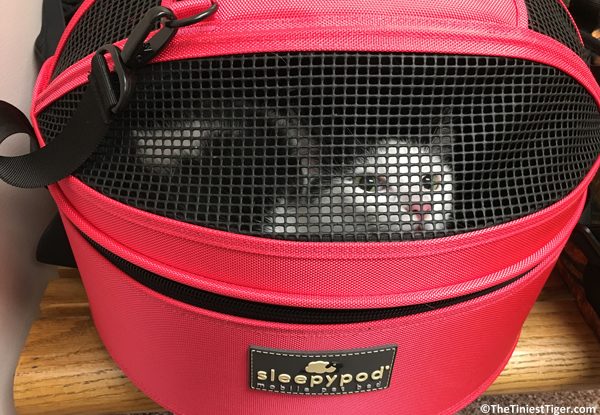
Cat stress at the vet clinic is something we all have experienced. A trip to the veterinary clinic is one of the most stressful experiences of their lives. From the time we reach for the carrier until we release our cats back into our homes, our own anxiety levels are elevated. We experience the emotional roller-coaster of worry, fear, sometimes near panic and finally relief.
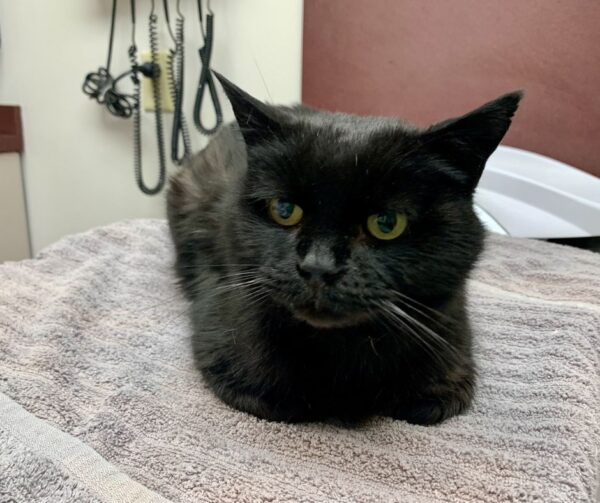
Recently, our Bob had to have tooth extractions. His age is estimated at 13.5 years so concerns over the anesthesia were high. Even though we did all the preliminary tests to make sure Bob was well enough for the procedure, that underlying fear and near constant questioning ourselves if we were doing the right thing for him began.
Some of his teeth were infected and he was showing inflammation in his throat. We knew this was a necessary procedure for his own well-being and that he would be much more comfortable when he healed from the surgery. Knowing all of this, we still ran the gamut of “what if” in our heads and to each other. Dr Barrett was patient and kind to us. She explained she had just made the same decision for her 16 year old cat and she too worried about her little loved one.
Veterinary Visits: A Major Stressor for Cats
Did you know our own anxiety during the visit may play a significant role in how stressed our cats feel? Understanding this emotional connection can help improve feline welfare, reduce fear in the exam room, and encourage more consistent veterinary care.
Scientific studies consistently show that most cats experience fear or distress during veterinary visits. Stress responses may include hiding, vocalizing, aggression, freezing, or physiological changes such as elevated heart rate. These reactions can compromise both welfare and diagnostic accuracy.
Because cats evolved as solitary hunters that conceal signs of vulnerability, their stress can be subtle and difficult for us to detect. As a result, emotional strain may build long before obvious behavioral changes occur.
The Emotional Link Between Guardian and Cat
Recent research has begun to explore how human emotions influence feline stress in clinical settings.
A large survey-based study of cat owners found that:
- Nearly 89% of cats were perceived as stressed during veterinary consultations.
- About half of owners also reported feeling stressed.
- Owners who felt anxious were significantly more likely to perceive their cats as stressed — and vice versa.
This suggests a bidirectional emotional relationship, where the distress of one partner amplifies the distress of the other.
Another body of behavioral research indicates that cats use “social referencing” — looking to their caregiver for emotional cues in unfamiliar situations. This means anxious body language, tone, or handling by us may influence how safe our cata feel in the clinic environment.
Why our Anxiety Matters for Veterinary Care
Our anxiety does not only affect feline emotional welfare — it can influence healthcare outcomes.
Studies show that:
- Stressful veterinary experiences may lead us to avoid future visits, delaying preventive care.
- Negative experiences can increase fear responses at subsequent visits, including aggression or avoidance behaviors.
This creates a cycle in which cat stress at the vet reduces both compliance and medical effectiveness.
Environmental Factors That Reduce cat Stress
Research highlights several ways to break the anxiety loop between us and our cats.
Feline-friendly handling techniques — such as quiet exam rooms, gentle restraint, and minimizing unfamiliar stimuli — have been shown to reduce both cat and human stress during consultations.
Other studies suggest that environmental tools, including pheromone use and low-stress transport strategies, can improve feline behavior and comfort during veterinary visits.
A Shared Emotional Experience
Taken together, current evidence points to a clear conclusion:
Veterinary visits are not just a medical event for cats — they are a shared emotional experience between cat and caregiver.
Cats appear highly attuned to human emotional signals, and reducing our anxiety may be one of the most effective ways to improve feline welfare in clinical settings.
What Cat Guardians Can Do
Based on current research, practical strategies include:
- Practice calm handling and carrier training at home
- Maintain predictable routines before appointments
- Choose feline-friendly veterinary clinics
- Use pheromone aids or pre-visit planning when recommended
- Focus on staying emotionally neutral and reassuring
By supporting our own emotional regulation, we help our cats feel safer — and make veterinary care a more positive experience for everyone involved.
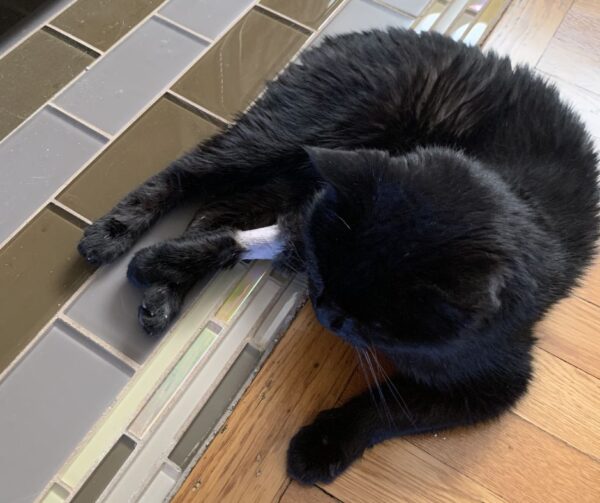
BOB AT HOME AFTER DENTAL SURGERY
Bob got along just fine during and after his procedure. He came home and went straight to his favorite place in front of the fireplace. We aren’t sure he was fond of his new “boot” fashion statement but we assured him his fur would grow back soon.
After his follow up visit, relieved he was healing up on schedule, we began to let go of the worry and questioning our decision for him to have the surgery. We remained calm on the outside for Bob, but knowing our cats pick up on our own fear and anxiety, we will try to stay calm on the inside too.
Final Thoughts on Cat stress at the vet
The emerging science of human–animal emotional dynamics is reshaping how we understand veterinary stress. Recognizing that our anxiety can influence our cats’ stress responses opens new opportunities to improve feline welfare, strengthen the human–cat bond, and encourage lifelong preventive care.