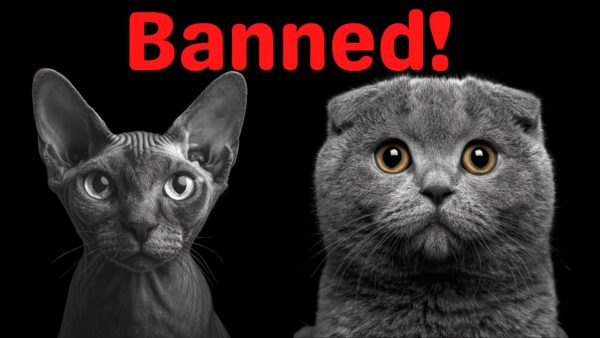
Why Scottish Fold and Sphynx Cat Breeds Are Banned
The Netherlands took a landmark step in animal welfare by banning the breeding of Scottish Fold and Sphynx cats, along with several other breeds that carry extreme physical traits known to cause suffering. This decision has gained global attention and sparked important conversations about how our love for certain “cute” features can come with a cost for the cats themselves.
Why the Netherlands Cat Breed Ban Exists
Let’s talk about what science tells us about these breeds, and how countries are rethinking breeding laws to protect animal welfare
What the Dutch Law Says
The Netherlands’ Ministry of Agriculture strengthened its animal welfare regulations to prohibit breeding cats with harmful hereditary traits. The ban applies when a physical trait is strongly associated with chronic pain, impaired functioning, or reduced quality of life.
Under these rules, Scottish Folds and Sphynx cats fall into the prohibited category because their defining features stem from genetic mutations that negatively affect their health.
Breeding these cats- or cats that could pass on those traits- is now illegal. Advertising, importing for breeding, and showing them in certain contexts is also restricted.
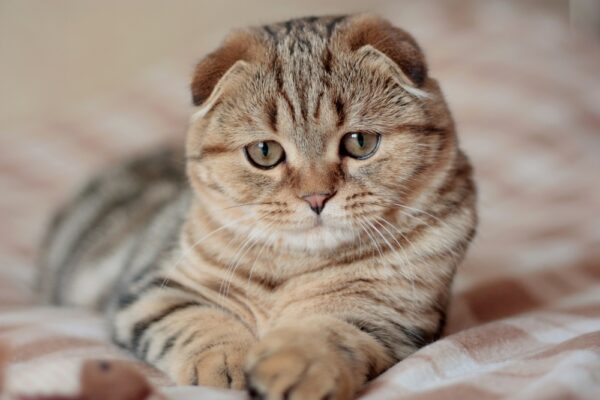
The Scottish Fold Cat Breed Ban
Scottish Fold cats are beloved for their adorable “folded” ears that give them an owl-like appearance. But that look is the outward sign of a serious cartilage disorder.
The Problem: Osteochondrodysplasia
The folded ears are caused by a mutation in the TRPV4 gene, which affects cartilage and bone development throughout the body — not just in the ears.
This results in:
- Painful arthritis, often starting as young as 6–12 months
- Abnormal bone growth, especially in the legs and tail
- Stiffness, lameness, and mobility issues
- Progressive, lifelong pain
Even “straight-ear” kittens from Scottish Fold parents carry the same gene mutation and can develop symptoms.
Why The Netherlands Took Action
Scientific studies, including work by the University of Edinburgh and veterinary welfare organizations, confirmed that all Scottish Folds—regardless of ear shape—are affected. Because the trait cannot be ethically separated from the health problem, the Dutch government declared the breed incompatible with responsible breeding.
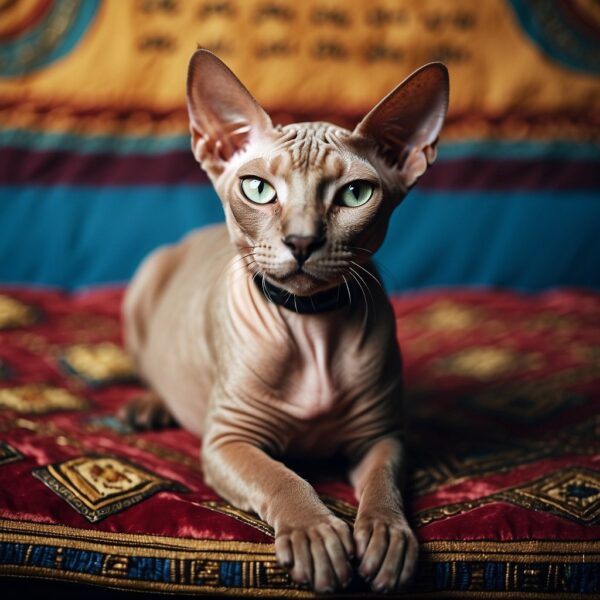
The Sphynx Cat Breed Ban
Sphynx cats are instantly recognizable for their hairless appearance. But that signature look results from a mutation that brings significant welfare concerns.
The Problem: Skin and Sensory Issues
Without a protective coat, Sphynx cats experience:
- Chronic skin infections and irritation
- Difficulty regulating body temperature
- High risk of sunburn
- Excessive oil production requiring constant bathing
But dermatological issues aren’t the only concern.
Genetic Risks
Many Sphynx bloodlines carry a mutation linked to:
- Hypertrophic cardiomyopathy (HCM) — a life-threatening heart disease
- Dental abnormalities
- Immune system vulnerabilities
What the Law Targets
The Dutch legislation specifically bans breeding animals whose appearance results in loss of normal sensory or physical function. For the Sphynx, the absence of fur — a vital sensory organ for cats — qualifies as a prohibited “extreme trait.”
A Larger Movement in Europe
The Netherlands isn’t alone. Several European countries are revising breeding laws to phase out animals with exaggerated traits linked to suffering. This movement focuses on:
- Flat-faced breeds (brachycephalic)
- Hairless animals
- Animals with deformities of ears, tails, or limbs
- Breeds with chronic breathing or mobility problems
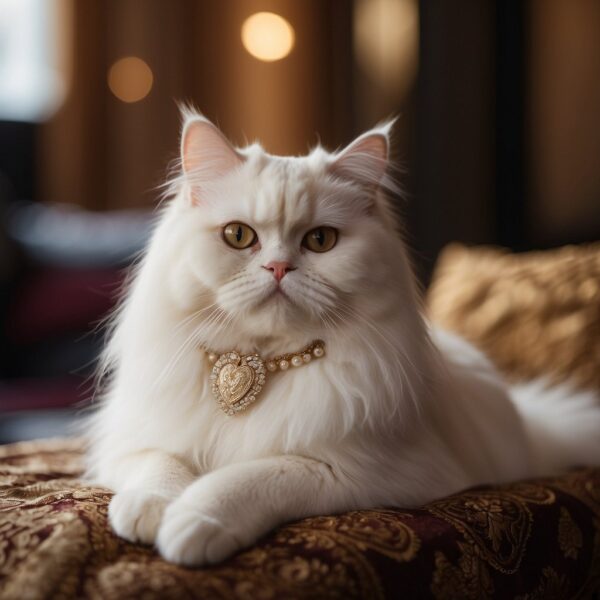
For cats, this includes attention toward:
- Munchkins
- Folded-ear breeds
- Extremely flat-faced Persians
The goal is not to punish owners but to prevent future generations of cats from inheriting painful conditions.
What this means for cat lovers
If you love Scottish Folds or Sphynx cats, you are not alone — these breeds are charming, affectionate, and deeply beloved. The Dutch government emphasizes that existing cats are not affected, and responsible owners are encouraged to continue caring for them with proper veterinary support.
But the ban reminds us that:
- Sometimes what we find cute is actually the result of a harmful mutation
- Cat welfare should always come before aesthetics
- Ethical breeding focuses on health, not appearance.
A compassionate path forward
The Netherlands’ decision invites an important conversation about how we can protect cats from unnecessary suffering. By valuing health over novelty, we move toward a future where every cat has the chance to live a comfortable, pain-free life.
And that’s something every cat lover can get behind.