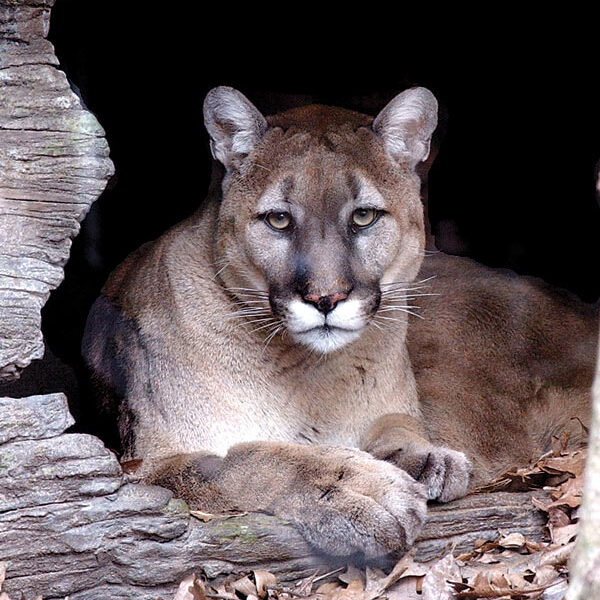
On January 23, 2018, the U.S. Fish and Wildlife Service announced that the Eastern cougar would be removed from the federal list of endangered and threatened wildlife.
Not because it had recovered.
Not because its forests were once again secure or its population had returned to the mountains, valleys, and woodlands of the eastern United States.
The Eastern cougar was removed because it was extinct. The Eastern cougar was declared extinct in a report issued March 2, 2011.
The final rule took effect on February 22, 2018. With the completion of that administrative process, a great cat that had once moved silently through the forests of the East was officially acknowledged as gone.
I wrote about the loss in a post titled Farewell Eastern Cougar. I wrote it as an obituary because a species extinction seemed to deserve one.
There should be a moment when we stop.
There should be words of remembrance. There should be an accounting of what was lost. There should be grief for an animal that once belonged to the landscape and for the wild places that could no longer sustain it.
The Eastern cougar was not the first species we lost, and would not be the last.
Since then, I have found myself carrying the sorrow of other losses: species moving closer to extinction, forests cleared and fragmented, wetlands drained, rivers polluted, and once-familiar wildlife becoming increasingly difficult to find.
There is a name for this sorrow.
Ecological grief.
Ecological grief is the emotional pain we experience when species, habitats, ecosystems, and familiar landscapes are damaged or lost. It may begin with one animal, one forest, one river, or one official declaration. Over time, it can become grief for the living world itself.

Ecological Grief: The Sorrow of What Is Missing
Ecological loss is not always announced in a final rule or marked by a formal declaration of extinction.
Often, it happens quietly.
A population grows smaller. A forest becomes fragmented. A local creek no longer supports the life it once did. Fewer insects appear on summer evenings. A bird that filled our childhood mornings with song becomes something we rarely hear.
A meadow becomes a development.
A wetland becomes a parking lot.
A migration route becomes a highway.
The places remain, but they are altered. The silence left behind may be noticed only by those who remember what was once there.
This is one of the deepest sorrows of ecological grief: the awareness that the world is becoming quieter, emptier, and less alive.
More Than a Name on a List
When a species disappears, we lose more than a name from a scientific record.
We lose a unique way of being alive.
We lose behaviors shaped over thousands or even millions of years. We lose calls, tracks, migrations, hunting strategies, nesting traditions, and relationships between plants, animals, fungi, soil, water, and climate.
Every species is part of a larger living system. When one vanishes, the effects may extend far beyond the loss of that animal or plant alone.
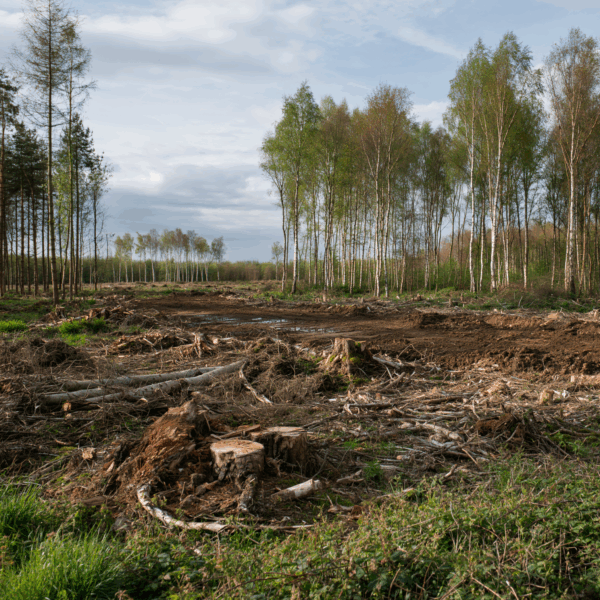
Habitat loss carries the same complexity.
A forest is not simply a collection of trees. It is shelter, nursery, refuge, food source, migration corridor, and home.
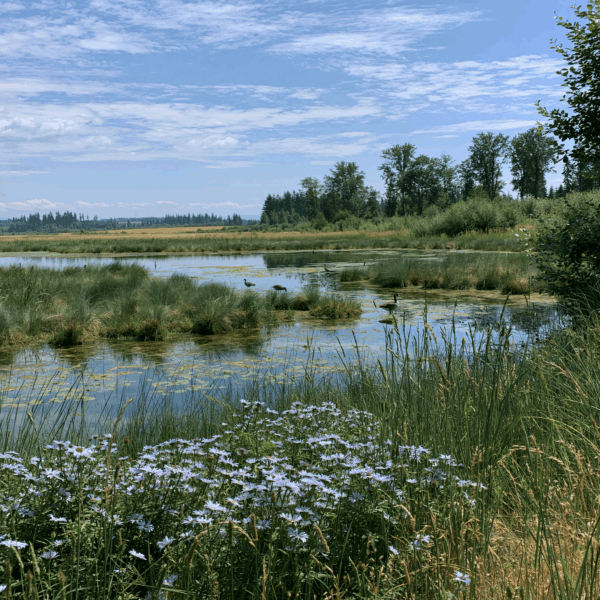
A wetland is not vacant land awaiting development. It filters water, stores carbon, reduces flooding, and supports countless forms of life.
A grassland is not an empty space. It is an intricate community of roots, insects, birds, mammals, and microorganisms.
When these places are destroyed, the animals who depend on them cannot simply move elsewhere. Suitable habitat may already be occupied, degraded, isolated, or gone.
For those who understand this, the loss can feel unbearable.
Mourning the Living World: The Loneliness of Caring
Ecological grief can be isolating because not everyone understands it.
People may wonder why someone is so upset over an animal they never encountered, a forest thousands of miles away, or a species they may never see in person.
But love does not require proximity.
We can grieve elephants we have never met, coral reefs we have never visited, and forests we know only through photographs. We can mourn because their existence matters—not only because of what they provide to humans, but because they have value of their own.
Those who work in conservation, animal welfare, environmental science, rescue, education, or advocacy may carry an especially heavy burden. They often see the losses up close. They understand the data behind the headlines. They know how quickly a population can collapse and how difficult recovery can be.
They may also experience the exhaustion of repeatedly explaining why the loss matters.
Caring deeply in a culture that often treats nature as expendable can be profoundly lonely.
Ecological Grief Is Evidence of Connection
Ecological grief is painful, but it is not a weakness.
It is evidence that we recognize our connection to the living world.
Humans are not separate from nature. We are part of it. Our lives depend on healthy soil, clean water, stable climates, forests, oceans, pollinators, and the intricate relationships that sustain life.
We also grieve because beauty matters.
The world would be poorer without the flight of monarch butterflies, the strength of elephants, the roar of lions, the songs of whales, the movement of tigers through forests, or the small wild creatures whose lives unfold mostly beyond human notice.
There is no shame in mourning what is being lost.
The danger is not that we care too much.
The danger is that repeated loss may tempt us to stop caring at all.
When the Loss Feels Too Great
Ecological grief can bring sadness, anger, anxiety, guilt, helplessness, and despair.
We may feel overwhelmed by the scale of the crisis. We may feel guilty for participating in systems that damage the planet, even when many of those systems are far beyond the control of any one person. We may wonder whether our individual efforts matter.
The losses should not be minimized with easy optimism.
Not every habitat can be restored. Not every species will recover. Some losses are permanent.
But grief and hope are not opposites.
We can mourn what is gone while protecting what remains.
We can feel despair and still act.
We can acknowledge the seriousness of the crisis without surrendering to the belief that nothing matters.
Giving Grief Somewhere to Go
There is no simple cure for ecological grief, but action can give sorrow direction.
We can support conservation organizations doing difficult work on the ground. We can restore native plants, protect pollinators, reduce pesticide use, keep cats safely indoors, advocate for wildlife corridors, oppose destructive development, and defend public lands.
We can vote with wildlife, climate, and habitat protection in mind. We can ask where products come from and how their production affects ecosystems. We can educate others without expecting ourselves to carry every issue alone.
We can also bear witness.
Bearing witness means refusing to look away.
It means saying that the lost forest mattered.
The vanished species mattered.
The poisoned river mattered.
The animal displaced from its home mattered.
Action does not erase grief, but it can transform helplessness into responsibility.
We Are Allowed to Mourn
We need more spaces where ecological grief can be spoken aloud.
We should be able to say, “I am heartbroken by what is happening to the natural world,” without being dismissed as overly sensitive or unrealistic.
We should be able to mourn a species as we mourn other profound losses.
We should also be able to admit that some days, the news is simply too much.
Rest is not abandonment. Stepping away briefly does not mean we no longer care. No one can absorb an endless stream of suffering without becoming exhausted.
To remain engaged for the long term, we must protect our capacity for wonder.
Watch the birds at the feeder. Listen for frogs after rain. Notice a spider’s web, a fox’s tracks, a bee inside a flower, or the return of leaves in spring.
These moments do not cancel the grief.
They remind us why the grief exists.
We mourn because the world is still beautiful.
Loving the World Enough to Defend It
Ecological grief is love with nowhere easy to go.
It is the pain of understanding what is being lost and knowing that much of it did not have to be lost.
But love can also become protection.
Our sorrow can deepen our commitment. Our anger can strengthen our voices. Our grief can remind us that every remaining species, forest, grassland, wetland, river, and ocean habitat is worth defending.
We may not be able to save everything.
But that does not mean we are free to save nothing.
There is still life to protect. There are still habitats that can recover. There are still species whose futures have not yet been decided.
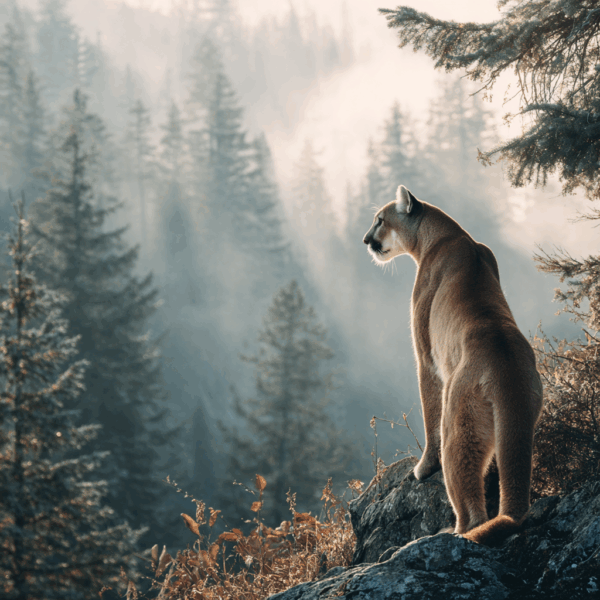
The Eastern cougar is gone.
This absence should remind us that extinction is not an abstract possibility. It is a final silence.
To grieve the living world is to understand that it matters.
To defend what remains is to prove that we mean it.