• About
  • Privacy Policy
    • Cookie Policy
    • Disclosure
    • Disclaimer
  • Contact
  • Advertise
    • Cat Clout! Top Influencer.
    • Awards
    • Demographics
  • PR Friendly
  • Nav Social Menu

    • Facebook
    • Instagram
    • Pinterest
    • Twitter
    • YouTube

The Tiniest Tiger

  • Home
  • Gracey’s Story
    • Gracey’s Blog
    • The Tiniest Tiger’s Habitat
      • Bad Kitty
      • Lazy Leopard
      • Bossy Backyard Blue Jay
      • Great Horned Owl
    • Gracey’s Place of Refuge
    • Bissell MVP 2010
      • Bissell MVP Pet Photo Winner 2010
  • Big Cat Conservation
    • Tigers
    • African lions
    • Jaguars
    • Leopards
    • Cheetahs
    • Mountain Lions
    • Smaller Big Cats
  • Domestic Cats
    • House Cats
    • Cat Behavior & Health
    • Litter Box Tips
    • The Tiniest Tiger Cats
  • CAT-egories
    • Cat Breeds
    • Names for Cats
    • Feral Cats
    • Product Reviews
      • Cat Toys
      • Cat Towers
      • For Cat Parents
  • Shop Thinking Tiger Books
  • Cat Coloring Pages

Why Are Calico Cats Almost Always Female?

Joanne's Blog

11 Oct
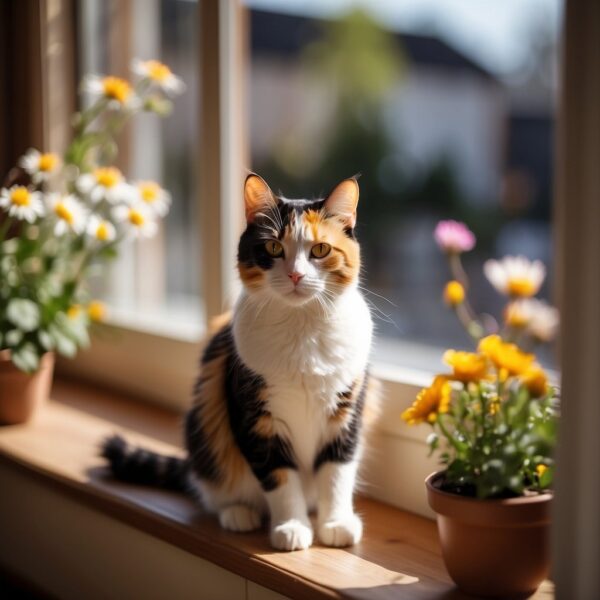
Calico Cat in window

The Science Behind Their Patchwork Coats

Why are calico cats almost always female? A splash of orange. A patch of black. A little white face that looks as though someone carefully painted around the whiskers.

Calico cats wear a beautiful genetic story in their fur. Their colorful coats also raise an intriguing question: why are these cats almost always female?

The answer begins with the X chromosome.

Two X Chromosomes, Two Color Possibilities

Female cats typically have two X chromosomes, while male cats typically have one X and one Y. The genetic variation responsible for orange fur lies on the X chromosome.

A female cat can inherit an orange-associated version on one X chromosome and a non-orange version on the other. That combination allows both orange and dark fur to appear—but something else must happen to create the patches.

How the Calico Cat Patchwork Appears

Early in development, cells switch off most of one X chromosome through a process called X-chromosome inactivation.

Which X remains active varies among cells. In some pigment-cell lineages, the orange-associated version stays active; in others, the non-orange version does.

As these cells multiply during development, they produce areas of different-colored fur. A calico’s coat becomes a visible mosaic of decisions made long before she was born.
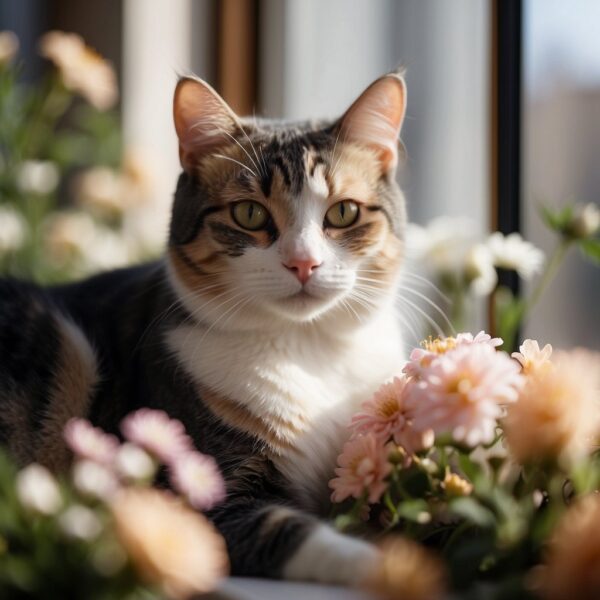
Dilute Calico Cat with flowers

Where Does the White Come From?

The white areas involve a separate genetic influence on pigmentation. Researchers distinguish tortoiseshell cats, whose orange and dark colors are often intermingled, from calicos, which also have white spotting.

The orange-and-dark mosaic and the white areas come together to create that familiar three-color coat.

Why Their Markings Vary So Much

Genes provide the ingredients, but development helps arrange them.

Because X-chromosome inactivation produces a mosaic, the placement of orange and dark patches can vary remarkably between cats. One may have an orange cheek, another a dark mask, and another a scattering of color across her back.

Rather than making the absolute claim that no two calicos ever look exactly alike, we can appreciate the fascinating process that gives their markings such individuality.

Most Calico Cats Are Female. Can a Calico Cat Be Male?

Yes, although male calicos are rare.

One explanation is an XXY chromosome combination: a male cat has an additional X chromosome, allowing both orange and non-orange versions to be present. Other unusual genetic circumstances, including mosaicism and chimerism, can also produce male tortoiseshell or calico cats.

These exceptions are a reminder that biology has more possibilities than a simple rule can capture.

A Discovery Added Another Piece to the Puzzle

Scientists had understood the inheritance pattern for many years, but the precise DNA change behind orange fur remained elusive.

In 2025, two research teams reported a deletion associated with a gene called ARHGAP36. The change alters the gene’s activity in pigment cells, helping explain how orange coloration develops. The findings were published in Current Biology.

For cat lovers, the discovery adds another reason to pause and admire a familiar face. Beneath those orange and black patches lies a remarkable story of chromosomes, developing cells, and scientific curiosity.

Do you share your home with a calico cat? Tell us about her markings—and the little patch you would recognize anywhere.

Leave a Comment

This post originally appeared on The Tiniest Tiger’s Conservation Cub Club and is the sole property of The Tiniest Tiger, LLC.

Previous Post: « First New Wild Cat Species in Over 100 Years

Primary Sidebar

Welcome to The Tiniest Tiger

Joanne McGonagle Namibia

Hi, I’m Joanne and I love all cats. With a Global Field Master of Zoology degree focused on big cat conservation, I like to learn and talk about big cats too. I share my habitat with Paul and we were adopted by our cats Annie, Eddie and Bob.

The Tiniest Tiger has a fierce following of cat lovers and we’d love it, if you’d join us.

More About Us

Join Team Cat!


Sprinkle & Paws Bakery Cats Coloring Book-click cover

Sprinkle & Paws Bakery Cats Coloring Book cover. The first in the Little Cat Village Series

K-Pop Cats Coloring Book On Amazon Click Cover

K-Pop Cat coloring book

Therapeutic Bed Turns Naps into Treatment

KneadCats.com

Cat School Days Coloring Book

Cat School Days


Big Wild Cat Coloring Book

Big Wild Cat Coloring Book

Big African Animals Coloring Book

Big African Animal Coloring Book

Big Sea Animals Coloring Book

Big Sea Animals Coloring Book

Learn Your ABCs with Curious Creatures

Learn Your ABCs with Curious Creatures

Recent Posts

  • Why Are Calico Cats Almost Always Female?
  • First New Wild Cat Species in Over 100 Years
  • Animal Sentience and Wildlife Law
  • The Deep Sorrow of Ecological Grief
  • Bakery Cats Coloring Book Giveaway
  • Cat Cancer Research Helping Humans
  • Welcome to Little Cat Village
  • Cat Stress at the Vet: When We Worry, Cats Worry Too!
  • Cat Lover Mug Giveaway
  • K-Pop Cats Coloring Book Giveaway

Popular Posts

President Lincoln and His Cats

Is That an Old Lion? | How to Age Lions

The Cat’s Meow. The Evolution of the Manipulative Meow

Mountain Lions Maligned By Misinterpretation of Data

Lion Guardians Give Each Lion a Maasai Name

The Tiniest Tiger content including photos and text is the sole property of The Tiniest Tiger, LLC. The Tiniest Tiger is a participant in the Amazon Services LLC Associates Program, an affiliate advertising program designed to provide a means for sites to earn advertising fees by advertising and linking to Amazon.com.

  • Log in
  • Entries feed
  • Comments feed
  • WordPress.org

The Tiniest Tiger, LLC | Copyright 2009-2024 | All Rights Reserved