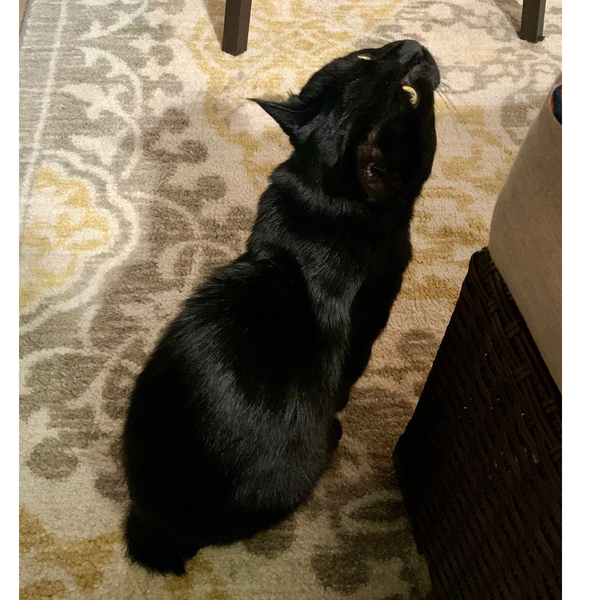
What Bob’s Slow First Steps Are Telling Us
Sometimes a change in our cats is easiest to notice in an ordinary moment.
For our Bob, it is getting up after a nap. When he wakes from sleeping, he appears stiff. As he starts to move, he walks very slowly.
Those first steps have our attention. When you know a cat’s daily habits, even a small change can feel significant. And changes like these deserve more than an assumption that a cat is simply getting older.
We have discussed these changes with Bob’s veterinarian and are trying Cosequin to see whether it helps relieve any of his symptoms. We also have the heated Knead Therapeutic Cat Bed as part of our efforts to make him comfortable.
Stiffness and slower movement can be signs of arthritis. Recognizing them gives us an opportunity to seek help and make his everyday life more comfortable.
Could your cat’s stiffness be arthritis?
Osteoarthritis is a painful condition affecting the joints. It can make familiar activities—getting up, climbing stairs, jumping onto a favorite chair—more difficult.
Cornell’s Feline Health Center identifies stiffness and a subtle decline in activity as possible early signs. A cat does not have to develop an obvious limp before joint pain becomes a concern.
Bob’s stiffness after sleeping and slow first steps prompted our discussion with his veterinarian. These signs do not, by themselves, establish a diagnosis. Other health problems can also affect movement.
Signs of arthritis in cats can be easy to miss
Watch for changes from your own cat’s usual behavior, including:
- Stiffness after resting: Getting up looks awkward or takes longer.
- Changes in jumping: Your cat hesitates, chooses lower surfaces, or stops visiting a favorite perch.
- Difficulty with stairs: Steps become slower or less frequent.
- Less play: Familiar games no longer seem appealing.
- Grooming changes: Some areas become harder to reach, leaving an untidy or matted coat.
- Litter box difficulties: Climbing over the sides becomes challenging.
- Changes in tolerance or sociability: Your cat hides more or objects to being touched or picked up.
These changes can have several causes. They are reasons for a veterinary examination, rather than proof of arthritis.
Start with your veterinarian
If your cat is moving differently, schedule an appointment. Tell your veterinarian what has changed, when you notice it, and whether it affects daily activities.
For a cat showing Bob’s pattern, a short video of getting up after sleep can help show what happens at home. Let your cat move naturally; there is no need to make them jump or repeat an uncomfortable movement.
Your veterinarian can assess pain and mobility, consider other causes, and decide whether imaging or other tests would help.
Ask about a plan for pain relief and follow-up. A comfortable home matters, but bedding alone cannot replace treatment for painful joints.
Never give your cat human pain medication on your own. Ibuprofen and naproxen can be dangerous, and acetaminophen can be fatal to cats. Medication decisions belong with your veterinarian.
What we are trying for Bob: Cosequin
After discussing Bob’s symptoms with his veterinarian, we are trying Cosequin to see whether it makes a difference. This is an ongoing trial, so we are not yet claiming that it has relieved his stiffness or changed the way he walks.
For us, the important observations are the everyday ones: how easily he gets up after a nap and how he moves during those first steps. Sharing changes—or a lack of improvement—with his veterinarian will help guide the next steps.
If you are considering a joint supplement for your own cat, discuss it with your veterinarian and ask how to assess the response and when to follow up.
Make everyday life easier
Look around your home from your cat’s level. Where does a normal routine require a big jump, a slippery turn, or a climb?
A few practical changes may help:
- Use secure ramps or broad, stable steps to favorite resting places.
- Add nonslip runners along frequently traveled routes.
- Offer a roomy litter box with a low entrance.
- Keep food, water, and litter accessible without unnecessary stairs.
- Place a supportive bed in a quiet, draft-free spot your cat already enjoys.
Ask your veterinarian about an appropriate body weight and comfortable activity. Short, gentle play sessions may be more manageable than games involving repeated leaps. Let your cat set the pace.
The Knead cat bed: designed with joint comfort in mind
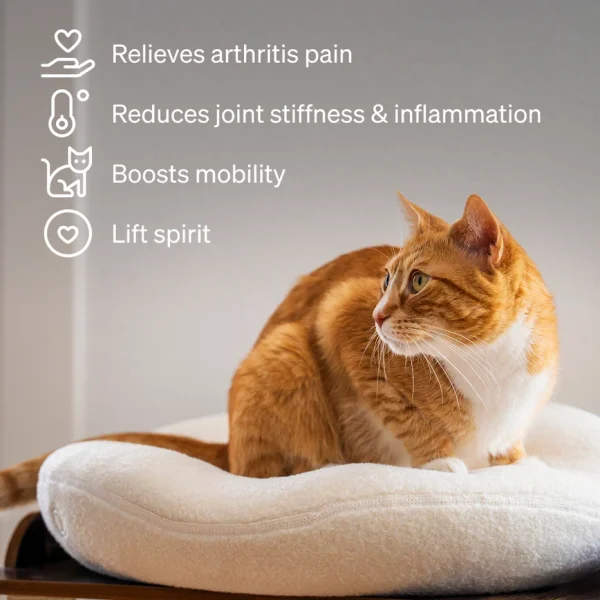
Bob’s slow first steps also bring attention to where—and how—our cats rest. We have the heated Knead Therapeutic Cat Bed, which brings cushioning, support, and warmth together in one resting place.
The Knead Therapeutic Cat Bed is marketed specifically for cats with arthritis or mobility difficulties. According to Knead, its design combines high-density, slow-rebound memory foam, a sculpted resting surface, and a heating system.
The design aims to cushion the body and provide support across different sleeping positions. Its warmth is another feature intended for comfort. A supportive bed can be one part of a broader comfort plan.
For any heated bed, follow the instructions and ask your veterinarian whether it suits your cat’s mobility and health. Your cat should be able to move away from the heat freely. Discuss any optional herbal accessories with your veterinarian before using them.
Pay attention to the little changes
For Bob, the changes we notice happen after sleep: stiffness when he wakes and a very slow start when he begins walking.
Those quiet moments matter. Our cats depend on us to notice when ordinary activities become harder.
We cannot stop the years from passing, but we can take changes seriously, seek veterinary help, and make home a gentler place to move and rest.
Have you noticed your cat taking slower first steps after a nap, or changing the way they reach a favorite spot?